First, my mea culpa.
My blogging habits have been terribly lax, and I am sorry.
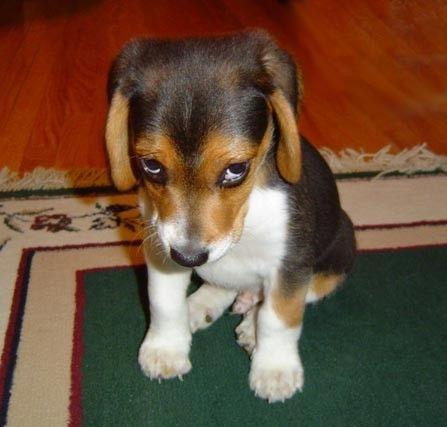
.
I allowed the summer, then a new WIP and then binge-watching the X-Files for the first time (yes, I'm pretty late to the game) to derail my blog.
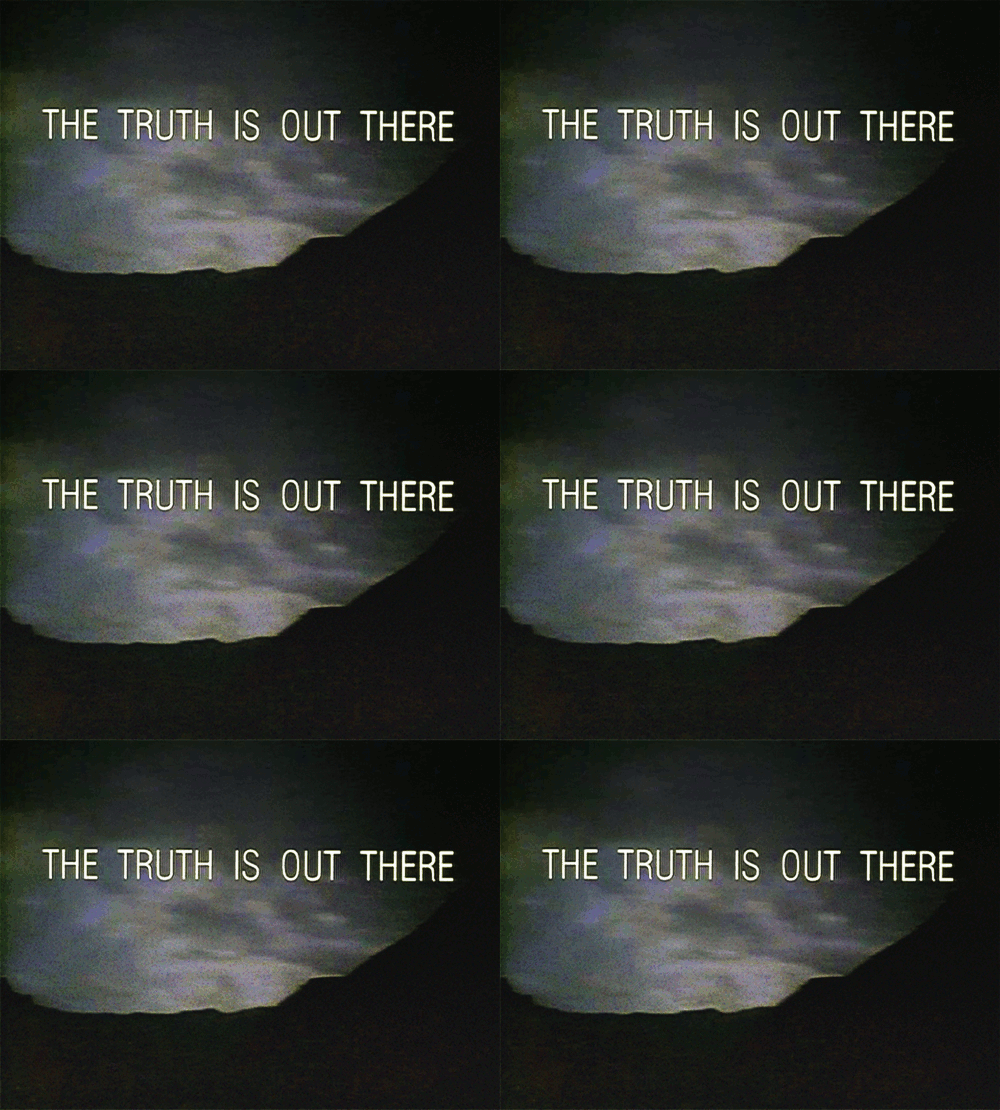
Quite frequently, I've had a thought that made me say, "hey! That'd be a great blog post!" And then I do nothing about it. And suddenly another month has gone by.
So here I am, months before the official time to make new resolutions, resolving to be a better blogger.
Onward.... about change.
I've learned this lesson so many times, you'd think I wouldn't be so surprised by it. But this is the first time I've actually begun to acknowledge this truth as it applies to my creativity, not just my life.
When I was in college, I thrived in my major -- poli sci. Out of that rather broad inquiry, I created my own focus: feminist political (largely deconstructionist) theory. I planned to be a forward-thinking, ground-breaking lawyer.
My life was very meticulously planned out: go to Kenya to teach English for one year, come back and attend Boalt School of Law.
Hah. Because yanno, plans that specific always work out, right???????
So this is what ACTUALLY happened:
1) I fell in love with Kenya, for all its beauty and tragedy, and decided to extend my contract.
2) While there, I realized I was better suited to advocate for women by telling their stories. The way I saw it, both could be public service -- but I preferred the pen and its wider public forum to the courtroom.
So, 2 years in Kenya, followed by a Masters in Journalism, and my life looked nothing -- I mean, NOTHING -- like what I'd planned. And it was awesome.
Fast forward to today. Nearly 20 years in journalism, several stints as a teacher/professor/instructor of all things English and writing (and some politics and media thrown in for spice). I became a war bride and then a mother of two.
And I could no longer ignore the muse. She called gently, then firmly, then finally hit me over the head. I hadn't planned on this career step until the kids were older, until I could get some more sleep.
HAH.
I'm working on my third book. My new WIP is a ghost story and I LOVE it. I am having so much fun writing it, it feels like I was BORN to write this book. I've planned and plotted it meticulously because it has a lot of moving parts and I want to be sure I don't get lost along the way.
Over the weekend, my characters hijacked the plan.
I mean, they TOOK OFF and went somewhere I had not plotted or planned.
Wait, what?
And it's not the first time this has happened to me. In fact, it has happened every single time, with each of my books.
Because things change. Usually without warning.
I don't try to resist the change. I actually never did, in spite of how uneasy it made me -- so now I just have to learn to trust that, in my books, as in my life, my characters will take the lead and they'll do fabulous things. Unless they don't, but that's what revisions are for. (Which is so much nicer than real life, where you don't get that lovely, infinitely forgiving do-over).
Does change wig you out?
What do you do when your characters take over??
Showing posts with label creative writing. Show all posts
Thursday, October 16, 2014
Saturday, July 26, 2014
Inspiration is Everywhere You Let it Be
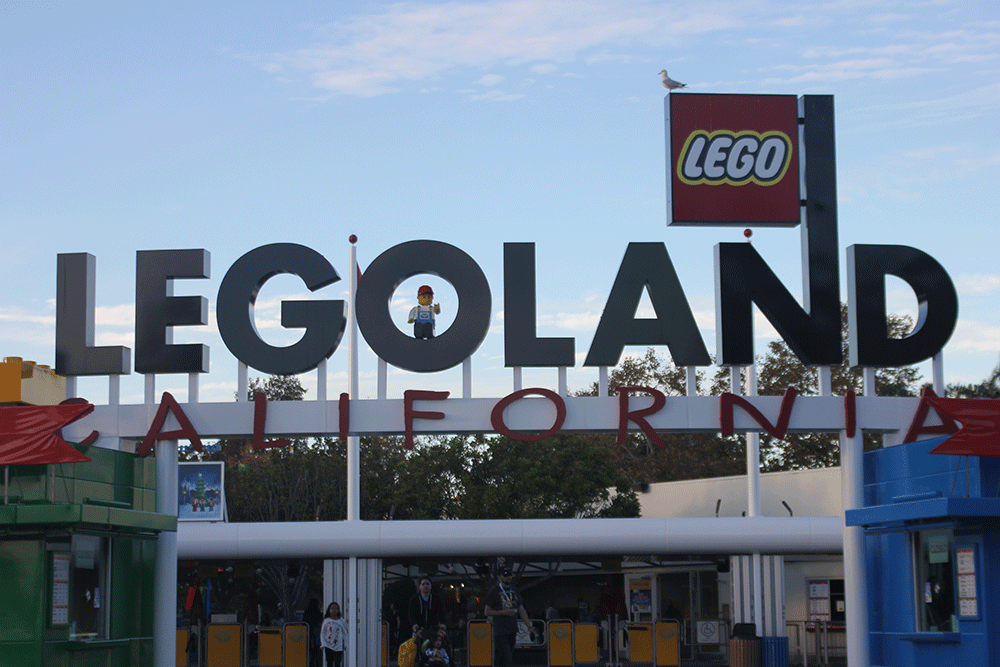
Taking your kids to a theme park is part of the parental hazing process -- a necessary rite of passage. Which is why this week, my family drove to Carlsbad, California to see Legoland.
For kids, this is mecca. That is all.
The thing is, I'm not a huge fan of theme parks -- they're noisy, smelly, overwhelming. Yuck.
It's the classic irony that as you eddy about from one ride or game to another, carried along by the sea of sweating humanity, much of what you hear and see is crying children. And parents hissing terse admonitions: "We came here to have fun!"
Sigh.
Moment of honesty: I said it once too. *Winces in shame*.
So of course this is the last place I would have expected to wheel right up into a moment of inspiration. Because I had thoroughly forgotten that inspiration is everywhere you let it be.
But behold: Rodin's Thinker - made entirely of Legoes:
Tens of thousands of Legoes superglued (Kra-gl-ed, for anyone who's seen the movie). A work of art lovingly rendered and placed in a central location. Where you couldn't miss it, even if you didn't know what it was.
What's inspiring about a Lego Thinker? The example he sets. You can create beauty out of anything -- even thousands of small pieces of knobby plastic. Which is what my brain feels like most days.
Another moment of revelation -- the beach.
I had forgotten how much I love the ocean. We've been in arid Arizona for 18 months now, and the memory of the breeze, the crash, and the smell have been stunned into submission by the mountains and cacti.
But when we finished with Legoland, we went to the beach ...
Aaahhhhhhh.
While my daughter happily played in the sand and my son and husband romped in the waves. I zoned.
I mean, ZONED. I only got about 5 minutes of that, but it was enough.
Inspiration is everywhere you let it be. The sunshine smell of hot sand, the salt-sweet wind. It doesn't have to come accompanied by a middle-of-the-night dream (although sometimes that's fun) and it often doesn't come on call.
But it can come when you look -- I mean really look, and NOTICE THINGS -- all around you. And when you don't preordain. As in, "Today I will come up with a brand new, amazing plot idea." (Imagine me saying that in a game-show voice).
More like, "Oh, look. It's Rodin's Thinker. Made out of Legoes." (Imagine me saying that in a Reese Witherspoon You've-got-a-baby-in-a-bar voice).
And then, "Oh, wow. It's the Thinker. Made of Legoes. That's totally cool." That one I said in my own voice.
Monday, April 28, 2014
Blooming Cacti
I've been a bad blogger.
Nothing for more than 20 days - completely ignoring the advice I give my blogging Webinar students. (Like the ones I've been creating a brand new class for).
Yes, I've been developing new classes, and yes, my family and I also went on vacation. So I (kind of) have reasons.
But. Also.
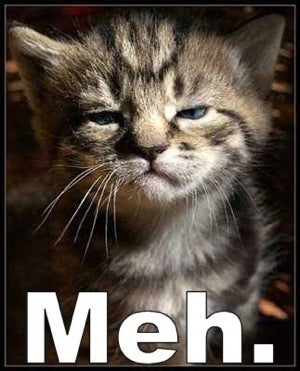
Been kinda -
Yup. Me and kitty, that's us.
Why? Because - editing.
Got two mss I'm trying to polish, and you know how it is ... eyes crossed, slogging through bad writing you were once very hopeful about .....
And it wasn't until I saw this:
And these:
That I began to feel inspired again.
They reminded me: even prickly things bloom.
Spring in southern Arizona (where I live) is not quite as miraculous as it is in other places - where you've survived Snowtopia and feelings of doom that suggest you'll never be warm again. But even here, in the land of the mundane winter, there is beauty when it's over.
Because things here flower too. Not the things I grew up with: we have no lilac, no forsythia, no hydrangea.
What we have is cacti.
Cacti are not particularly lovely. They're spiky, thorny, unfriendly things that don't need a whole lot of water and thus they live a long time and don't care much if someone doesn't love them.
There's a simile there. (My 8yo is studying simile, therefore I am too).
I think my writing is like the cactus. Not the part where it doesn't need TLC - all writing needs that!! But, rather, the part where it's unlovely and unremarkable.
BUT THEN. I remember that similes are only perfect for a small moment in time. Because even the cactus BLOOMS. And then it's remarkable. And everyone stops and looks at it and takes pictures and says, "What an amazing thing this is! How lovely and worth my taking a moment to stop and admire."
So if that can be true of the cactus, it can certainly be true of my writing, no?
Do you ever feel like your writing is like a cactus and you're just desperately trying to coax the blooms from the thorns?
Nothing for more than 20 days - completely ignoring the advice I give my blogging Webinar students. (Like the ones I've been creating a brand new class for).
But. Also.
Been kinda -
Yup. Me and kitty, that's us.
Why? Because - editing.
Got two mss I'm trying to polish, and you know how it is ... eyes crossed, slogging through bad writing you were once very hopeful about .....
And it wasn't until I saw this:
And these:
That I began to feel inspired again.
They reminded me: even prickly things bloom.
Spring in southern Arizona (where I live) is not quite as miraculous as it is in other places - where you've survived Snowtopia and feelings of doom that suggest you'll never be warm again. But even here, in the land of the mundane winter, there is beauty when it's over.
Because things here flower too. Not the things I grew up with: we have no lilac, no forsythia, no hydrangea.
What we have is cacti.
Cacti are not particularly lovely. They're spiky, thorny, unfriendly things that don't need a whole lot of water and thus they live a long time and don't care much if someone doesn't love them.
There's a simile there. (My 8yo is studying simile, therefore I am too).
I think my writing is like the cactus. Not the part where it doesn't need TLC - all writing needs that!! But, rather, the part where it's unlovely and unremarkable.
BUT THEN. I remember that similes are only perfect for a small moment in time. Because even the cactus BLOOMS. And then it's remarkable. And everyone stops and looks at it and takes pictures and says, "What an amazing thing this is! How lovely and worth my taking a moment to stop and admire."
So if that can be true of the cactus, it can certainly be true of my writing, no?
Do you ever feel like your writing is like a cactus and you're just desperately trying to coax the blooms from the thorns?
Sunday, December 8, 2013
Tribute
"There is no passion to be found playing small - in settling for a life that is less than the one you are capable of living."
- Nelson Mandela
This - what Mandela said - is what we talked a lot about in the Africa Days. When we felt Big. We were (almost) fearless, we were on an adventure, and we were doing Good Work.
It was an amazing feeling, this post-college freedom, this sense of being more alive than ever before. We were young and full-to-the-brim of a very sincere desire to help.
Everything felt intense: the sunsets and sunrises, the sweetness of a mango on a warm afternoon, the shock of bathing in cold water, the sharpsour smells of goats and the cooking fire that clung to all the women's skirts.
We were a small group of American expats living in Kenya, teaching English in small harambee schools in remote parts of the country. "Harambee" is a Swahili word that means, essentially, "working together". Harambee schools are community supported, operating from student fees and village donations. Unlike the bigger city schools, they get no aid from government funds Our school, in Kimilili, was actually a hybrid: we got a little bit of government money, but mostly we needed those school fees.
Harambee and hybrid schools are poor. They don't have enough teachers, books, or even classrooms. Their budgets are uncertain because students periodically drop out to help the family by working on the farm. Sometimes the girls are pulled so their brothers can go to school, although this happens less and less often these days, thankfully.
When we were there, Nelson Mandela was in prison on Robbin Island. We paid close attention from Kenya, because there, like everywhere, he was the face of Black Pride. Of freedom and justice. Of the fight for equality. We felt as though our students' futures were tied to his - if he could defeat apartheid, perhaps our students too would defeat poverty, endemic illness, corrupt politicians, apathy, and helplessness. Like I said, we were young and sincere. Magic was possible. Mandela seemed magic.
We believed that helping educate these children was fighting for equality. Even though Daniel arap Moi was a democratically elected president (rigged elections notwithstanding), social justice in Kenya was still just a nice idea that only worked in other countries. There was no middle class. You were either very wealthy or very poor, and there was little opportunity to change the circumstances of your birth. Our students were the very poor. Most of them didn't stand a chance at going to college. But if we worked hard and tried to inspire, maybe 1 - or even 2 - would go further than his peers or his parents. Maybe they would have a shot at a better life, and would help contribute to a generation that refuted tribal nepotism and corruption.
This was our passion. This was how we didn't settle for a smaller life -- we insisted on the possibility of a bigger life for our students. We encouraged expressive writing and reading beyond the required list and creativity. They were never optimistic about their futures - they'd seen too much -- but we tried to be hopeful anyway - without being unrealistic.
We left before our students graduated. We tried to keep in touch with them, but as so often happens, after a few years, the threads broke. I know that most of my students led the life we knew they would, which isn't bad, but it's not as big as they were capable of.
One or two got lost in Nairobi. One killed himself.
But a few went to technical college, and that is a big deal. They were taught trades which gave them a better chance at eking out a living that wasn't dependent on the land.
I don't know how they fared in the years of political unrest or the riots after the last election a few years ago. Malaria, TB, dysentery, malnutrition, and a wide scope of commonly misdiagnosed or ignored diseases (AIDS, STD's, diabetes) have surely claimed some of them.
In the years after we left, Mandela was released from prison, elected president, and worked with de Klerk to foster a culture of working together rather than retribution. He worked magic.
As we all know, it was a pragmatic magic, the kind you have to use in a land that will break you if you don't accept its cruelty and perverseness along with its beauty.
And while its scope was limited in that it couldn't reach my students in any practical way, it was still magic in its ability to inspire, to infuse my children and me with the feeling that we were worthy, that we mattered in this world, that we could be bigger and better.
And so I honor Nelson Mandela, for all the reasons you've read about this week, and for the magic that urged us all to be big.
Tuesday, November 5, 2013
NANOWRIMO
Kudos and salutations to all you brave people doing #NaNoWriMo right now.
So #NaNoWriMo just doesn't work for me, practically or conceptually.
I'm writing about it today because I'm new to this concept, as I am to most other things in this writerly world. So to learn more about it, I've been following Twitter to see what people are doing and what they are saying about what they are doing.
(For those who are where I was a few weeks ago: it means National Novel Writing Month. The deal is, you sign up, you agree to write at least 50K words toward a novel, and you get to "track" your word count every day plus chat online with everyone else doing it, plus take advantage of lots of encouraging advice and online help, plus weed through a lot of vendors who want to "help".)
And what I have learned is that I envy anyone who can take the time to set and work toward those amazing goals. Whether it's because they have no kids or no spouse or perhaps an amazingly helpful/understanding spouse who will care for the kids, or grown kids or flexible work hours or no work hours at all or whatever. Because that's what it takes to be able to set and live up to those goals, and again, I say, HOW GREAT!!
I mean that - I am not being snarky. Those who know me know that I am not a snarky person, for the most part. I mean, I do have my moments... but mostly I am kind of Polyanna (don't judge) about the whole thing and I say, let everyone who can, do. And bravo to them for doing.
But I am also just going to say, as an example of another way of doing things, that I set very fluid goals. My goals are based on completing scenes and certain developments within a certain time frame, rather than word count. Because let's be real, if I set specific word count goals, I will:
1) stress too much about the word count and then forget to hug my kids,
2) stress too much about the word count and then forget to feed my family,
3) stress too much about the word count and then be too stressed.
So #NaNoWriMo just doesn't work for me, practically or conceptually.
I'm the first to admit, I'm lucky. I don't do this for a living, I do this because I simply can't get through the day without telling more of the story. My actual ability to sleep at night is dependent on whether I got it out of my head onto paper. (OK, well, onto the computer. Showing my age here.) My WIP is a set of stories I can't keep inside anymore, and so I write.
And I care for my children all day.
And I manage my home.
And I work on course design, etc. whenever I need to for my paying gig. (Graduate School USA)
And, I really want to be a writer. I mean a real one. You know, the kind with an agent and a pub date and cover art.
(No, I am not a privileged, moneyed Mommy who doesn't have to work and so I while away the long empty hours piddling away at a book. (NO MOMMY WARS ALLOWED HERE)
I am an at-home Mommy by choice who left a lucrative career in tv news where I had the same affliction -- I simply couldn't get through the day without telling the story as best I could.)
But I digress.
For those of you who can't or have chosen not to do NaNoWriMo, please do not stress. Do not use it as the litmus test for how real an author you are or how dedicated you are to your WIP.
If you're so moved, be glad for the success of those who are in the throes and enjoying the camaraderie right now, but PLEASE do not worry that you do not have the chops to be a good writer or won't ever finish your novel just because you can't find the GIANT BLOCK OF TIME you need to do this thing.
Push yourself, to be sure. I mean, REALLY push yourself to write. (And edit, edit, edit, revise, revise, revise) You can't do it if you don't have the fire in the belly, even on the days when you don't.
But also: write what you can when you can, set the kind of goals you can live with, and -
Be brilliant.
Friday, November 1, 2013
Writerly Tip #6: Prune Them and They Will Grow
Too true.
At the very beginning of my querying process, an agent told me my ms was too long. I had to cut at least 40-thousand words.
It hurt, hurt, hurt, but the truth was, (And I secretly knew this) the cutting was a healthy, good thing.
What she told me was, cut the first 50 pages. You probably don't need them. Actually, what she said was, you the author needed to write those first 50 pages because they helped you get to know your characters and their backstory. But the book itself, the story itself, really doesn't need them.
And of course she was right.
I cut the first 50 pages, bleeding profusely as I did, and discovered a better book within.
I love what Whedon says because it reminds me of the wisdom of the First 50 Pages rule. Plus, he's right.
I've done that before too - when I found myself looped endlessly in a scene trying to make it make sense, I finally cut it and tried something different.
Tada!!!!!!!
For those of you who garden, this analogy may work: prune them and they will grow.
Thanks to Buzzfeed for the list of 24 quotes from famous writers from whence this quote (and the inspiration for this post) comes.'
Wednesday, October 30, 2013
Writerly Tip #5: People Can Be Petty
A friend called today to vent about not-so-professional warfare going on at work. It's the old One Colleague Out To Get Another story. It goes something like this:
Colleague #1 is a decent person, cares about quality - and here's the rub - is better at the job than #2. BUT - Colleague #2 outranks #1, and thus is able to subject #1 to humiliating and professionally damaging experiences. Most seem to agree #2 is the bully, but no one can - or will - do anything about it.
Didja follow all that? No worries. The synopsis: Insecure, bad people in the work place.
Anyone lived this story before? I know you have. Cause I've seen it.
My reaction when I hear a story like this is why in the world can't people learn how to do their jobs better rather than try to take down the competition? Isn't that a smarter way to compete than to kill everyone off? Then, in the end, you're ACTUALLY GOOD AT YOUR WORK.
Doh.
And because I am so painfully logical, I often struggle to allow my characters to be illogical. I don't want them to be mean/quixotic/spiteful/stupid/irrational/insecure!!! Because I don't want people in general to be that way.
But the thing is, no one wants to read about perfect people.
And, ahem, I guess in spite of my high flying ideals, I am still a work in progress myself. And so I listen to my friend, let him vent, and remember the lesson: people can be petty. And I can't clean it up, even for fiction, if I want them to be believable characters.
Colleague #1 is a decent person, cares about quality - and here's the rub - is better at the job than #2. BUT - Colleague #2 outranks #1, and thus is able to subject #1 to humiliating and professionally damaging experiences. Most seem to agree #2 is the bully, but no one can - or will - do anything about it.
Didja follow all that? No worries. The synopsis: Insecure, bad people in the work place.
Anyone lived this story before? I know you have. Cause I've seen it.
My reaction when I hear a story like this is why in the world can't people learn how to do their jobs better rather than try to take down the competition? Isn't that a smarter way to compete than to kill everyone off? Then, in the end, you're ACTUALLY GOOD AT YOUR WORK.
Doh.
And because I am so painfully logical, I often struggle to allow my characters to be illogical. I don't want them to be mean/quixotic/spiteful/stupid/irrational/insecure!!! Because I don't want people in general to be that way.
But the thing is, no one wants to read about perfect people.
And, ahem, I guess in spite of my high flying ideals, I am still a work in progress myself. And so I listen to my friend, let him vent, and remember the lesson: people can be petty. And I can't clean it up, even for fiction, if I want them to be believable characters.
Sunday, October 27, 2013
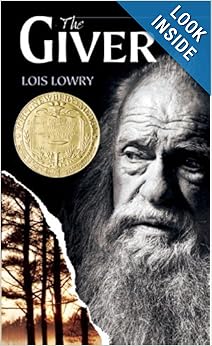
The Giver
Talking about THE GIVER today. Even though it was published in 1993, it's in the news a lot these days because it's being made into a movie.
And because this young woman has been cast in said movie:
She's been cast in a role that has more emotional than actual presence in the book, so it will be interesting to see what they've done to expand that role.
AT ANY RATE, because this is mostly a blog about writing, I decided that instead of discussing the entire book and its many attributes, I will just note one particular thing about the way Lois Lowry crafted her story, a thing that has become a writerly tip for me and (I hope) for others:
I aspire to her ability to reveal.
<SPOILER ALERT>
It isn't until page 94 (of a 179-page book) that we learn our main character Jonas and all his friends and family do not see colors. The Giver tells Jonas that the fleeting glimpse of a "mysterious quality" he has seen in an apple and in his friend's hair is the color red.
Wow.
And wow again.
Under less skilled hands, we would have learned that fact much earlier in the book. But Lowry deftly, patiently grows her world of "Sameness" for us, establishing the concept of a one-note society in which you are assigned your family, your profession, your home. And even though, as you read about this world where there are no real animals or cars, and you slowly become horrified by the lack of choice and personality and individuality, it never occurs to you (or it didn't to me) that these poor sods can't even see the color of each other's hair, much less the sky, grass, and trees around them. And there's a brief mention of an Aryan Empire-style attempt to breed away skin color as well so that everyone is the same.
Bu they can't see color. All they can comprehend is that some people - like Jonas - have light eyes. But those people are considered "different", and thus are shamed by that quality and no one talks about it for fear of embarrassment.
So I aim to reveal as well as Lowry, and I look forward to seeing the fun they will have putting this moment on film.
And as I have done before, I encourage all the writers out there to use this talent for revealing to make your own work better.
Be brilliant! (And colorful)
Thursday, October 24, 2013
Tip #4: Update
So Simon and Schuster has just launched a new imprint- dedicated to Sci Fi, Fantasy, and Horror. According to Publishers Weekly, it's not even named yet, but it's got an executive staff: Jon Anderson from S & S Children's, Justin Chanda also of S & S, and Joe Monti, most recently from Barry Goldblatt Literary.
Which means, as I said in my last post, you have to take trends with a grain of salt. And maybe vampires won't completely go gently into the good night. Well, maybe they will. We'll see. It would be ok with me if they did, just for a little while, although I do love a good vampire romance.
Anyway, what this furthermore means is that while it is true (for prospective YA authors) that agents are thirsting for "real, contemporary fiction", they're also going to pay attention (and perhaps dance a small jig) when one of the Big Five publishers launches a new imprint.
So once again, the take-home is: If you're writing that real, contemporary YA book, may the gods of trend hipness and breathtaking prose be ever at your side.
And if you're not, fret not. The gods of breathtaking prose have not forsaken you -- and neither have the publishers.
Be optimistic, be brilliant, and work hard.
Which means, as I said in my last post, you have to take trends with a grain of salt. And maybe vampires won't completely go gently into the good night. Well, maybe they will. We'll see. It would be ok with me if they did, just for a little while, although I do love a good vampire romance.
Anyway, what this furthermore means is that while it is true (for prospective YA authors) that agents are thirsting for "real, contemporary fiction", they're also going to pay attention (and perhaps dance a small jig) when one of the Big Five publishers launches a new imprint.
So once again, the take-home is: If you're writing that real, contemporary YA book, may the gods of trend hipness and breathtaking prose be ever at your side.
And if you're not, fret not. The gods of breathtaking prose have not forsaken you -- and neither have the publishers.
Be optimistic, be brilliant, and work hard.
Subscribe to:
Posts (Atom)